Every year, devastating wildfires burn across the United States. At the same time, a growing number of people are living where wildfires are a real risk. While these fires will continue to happen, there are things you can do to protect your home and neighborhood as well as your family’s safety. The Firewise USA® program is here to help you get started.
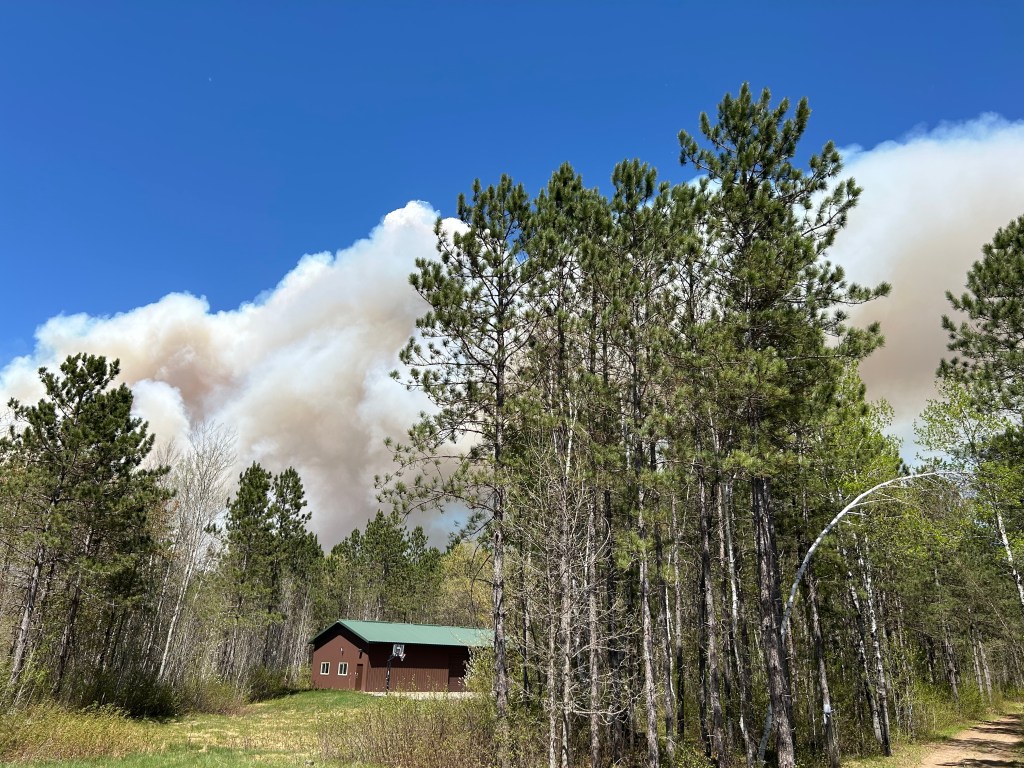
A wildfire raged near Sleeping Bear Tree Farm. Over 1,700 areas burned, with many people evacuated. This is a good time to think about fire safety. Are you prepared for a wildfire?
What can I do to prevent forest fires?
You may remember that Smokey has a few thoughts on this topic!
Wildfire Prevention Strategies Preventing wildfires requires a combination of individual responsibility, community action, and proactive land management. Most wildfires are human-caused, so small changes in behavior and planning can make a big difference.
Personal and Recreational Safety Check weather and drought conditions before any outdoor fire activity. Avoid ignition when it’s hot, dry, and windy
Build campfires safely: Use a flat, open area away from flammable materials, clear grass and debris, and keep the fire small. Always stay with it until it’s completely extinguished
Extinguish fires properly: Douse with water, stir, and repeat until cold to the touch
Avoid driving on dry grass; exhaust can ignite vegetation
Maintain vehicles and equipment to prevent sparks
Carry safety gear: Shovel, bucket, and fire extinguisher in your vehicle
Community and Land Management Create defensible space around homes and structures by clearing flammable vegetation and keeping it well-maintained
Use prescribed burns to reduce fuel buildup in forests and grasslands, lowering the risk of large, destructive fires
Implement home hardening with fire-resistant materials, ember-resistant vents, and landscaping that reduces fuel load
Engage in community mitigation through programs like U.S. Forest Service Community Mitigation Assistance Teams, which help residents and local governments assess and reduce wildfire risk
Public Education and Enforcement Promote “Recreate Responsibly” and Leave No Trace principles to reduce human-caused ignitions
Enforce fire regulations in public and private lands to deter unsafe practices
Raise awareness about wildfire risks, especially in vulnerable populations like children, the elderly, and pregnant women
Long-Term and Climate Adaptation Address climate change impacts by supporting policies that reduce greenhouse gas emissions, as hotter, drier conditions increase fire risk
Invest in early detection systems and community preparedness to respond quickly if fires start
By combining personal vigilance, community planning, and environmental management, we can significantly reduce the frequency and severity of wildfires, protecting lives, property, and ecosystems.
What can you do to protect your home?
Extreme wildfire activity has more than doubled worldwide. NASA’s Terra and Aqua satellites detect active wildfires twice each day. Scientists studied this data over a 21-year span and found that extreme wildfires have become more frequent, more intense, and larger. The largest increase in extreme fire behavior was in the temperate conifer forests of the Western U.S. and the boreal forests of northern North America and Russia. Warmer nighttime temperatures are a major contributing factor, allowing fire activity to persist overnight.
In 2021, a destructive wintertime wildfire in Colorado became part of a growing trend of wildfire activity extending well beyond the summer. By looking back at 35 years of weather data, U.S. Forest Service scientists found that fire seasons are starting earlier in the spring and extending later into autumn. Parts of the Western United States, Mexico, Brazil, and East Africa now have fire seasons that are more than a month longer than they were 35 years ago.
Wildfires can also be a major source of carbon dioxide emissions. Researchers found that carbon emissions from forest fires increased by 60% globally between 2001 and 2023. Fire emissions from boreal forests in Eurasia and North America nearly tripled during that same time period, driven by a warmer, drier climate.
In 2023, Canada’s warmest and driest conditions since 1980 stoked extreme fires that lasted for five months. NASA researchers found that these fires released about 640 million metric tons of carbon.
Although some variations in the weather are natural, human-caused climate change has been found to be the main cause for increasing fire weather in the American West.
As the planet warms, hotter weather, earlier melting of winter snow, warmer nighttime temperatures, and decreasing summer rainfall are all contributing to increased fire activity. In the Western U.S., the amount of summertime precipitation has the biggest effect on how much land area is burned in a given year. Historical efforts to reduce all wildfires led to decades of fire suppression, which has caused a buildup of fuels in some forests. This combination of fuel build-up and warmer, drier conditions increases the potential for extreme fires.
It’s time for a thinning of our Red Pine forest! Using Ponsse Equipment, we are harvesting about 20 acres of woods planted in 1982. This is the second thinning for this Family Forest.
May 31-June 6, 2026, is National Forest Week! This is the 8th annual National Forest Week, celebrating stewardship of some of America’s most treasured places.
This summer, the National Forest Foundation is launching a nationwide campaign inviting Americans to choose national forests between Memorial Day and Labor Day and beyond. The message is simple: Whatever people may be searching for—connection, peace, adventure, healing, inspiration, or time with family and friends—there is a national forest ready to welcome them.
Through storytelling, partnerships, digital outreach, and a new public service announcement, the National Forest Foundation aims to inspire millions to experience these landscapes firsthand. Thanks to AMC Theatres, a PSA will run in theaters nationwide throughout June, extending this invitation across the country.
In every corner of the country, from snow-capped peaks and red rock deserts to sprawling tallgrass prairies and dense hardwood forests, National Forests are our communities’ backyards: where we go to work, play, rest, and revitalize our connection with nature and each other.
The Minnesota Forestry Association (MFA) was started on January 18, 1876. The members of the current MFA celebrated the 150th year on Sunday, January 18, 2026, with a MFA history webinar led by MFA President Brian Huberty. You can view his presentation slides here: Minnesota Forestry 150 Years of Resilience
The MFA was the nation’s first forestry association and is the oldest conservation organization in Minnesota.
The original mission of the MFA was to encourage Minnesotans to plant trees, but it quickly expanded to advocating for responsible, sustainable forest management for the benefit of all Minnesotans. The work of MFA members has significantly shaped forestry in Minnesota, including the establishment of the state fire warden system, the state forest service, state parks, public forest land, the University of Minnesota forestry program, and resources for private landowners managing family forests.
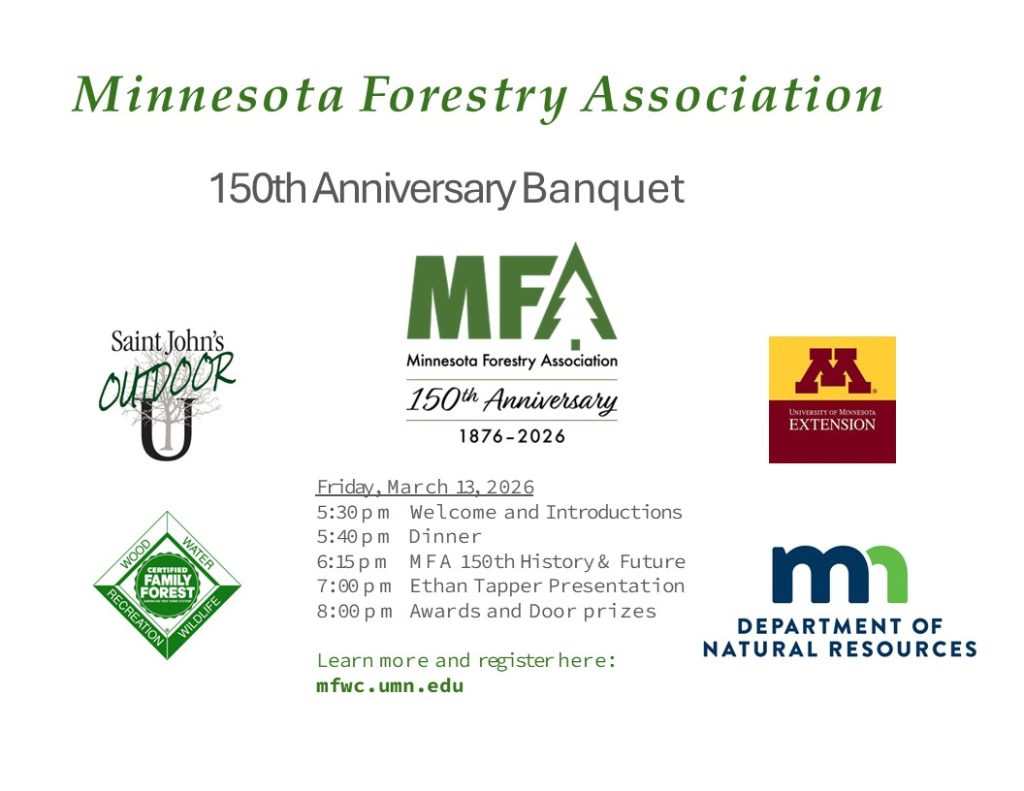
Come celebrate the MFA 150th at the Minnesota Family Woodlands Conference, Friday, March 13, 2026, with keynote speaker Ethan Tapper. Register at https://mfwc.umn.edu/
Forest products are important to rural economies and to all Americans. Many forests across the country are overcrowded with smaller trees, increasing the risk of catastrophic wildfire. Making use of wood materials from tree thinning projects helps reduce the risk of damaging fire, improves economic viability of these projects, and contributes to rural economies.
Economic Significance The U.S. Forest products industry generates $288 billion annually (approximately 4 percent of the total U.S. manufacturing GDP).
Approximately 950,000 people are employed in the U.S forest products industry with a payroll of approximately $50 billion annually. The forest products industry is also among the top 10 manufacturing sector employers in 45 states.
Minnesota Forest Products
Minnesota’s forest products industry is a major economic force, generating over $18 billion in annual gross sales, supporting around 70,000 jobs, and ranking as the state’s 5th largest manufacturing sector, encompassing logging, pulp/paper, engineered wood (OSB), furniture, and more, with significant tax contributions and vast forest resources providing sustainable fiber.
Key Economic Indicators:
Gross Sales: Over $18 billion annually
Employment: Supports over 69,000 jobs
Manufacturing Ranking: 5th largest manufacturing sector in the state
Tax Revenue: Provides nearly $500 million in state/local tax revenue
Industry Scope: The industry is diverse, including:
Join fellow woodland stewards for two days of connection, inspiration, and hands-on learning at the 2026 Minnesota Family Woodlands Conference. Whether you’re a seasoned landowner or just beginning your stewardship journey, this event is designed to help you build knowledge, confidence, and resilience in your woods.
Friday, March 13 – Pre-Conference Field Tours, Banquet & Keynote
Start your weekend with a guided field tour highlighting real-world forest management in action. Tours require pre-registration and space is limited, so sign up early. In the evening, reconnect over dinner at our Friday night banquet, featuring keynote speaker Ethan Tapper.
Saturday, March 14 – Conference Sessions & Exhibits
Saturday brings a full day of learning, networking, and resource sharing. Expert panels and concurrent sessions will cover topics like:
Woodland management best practices
Wildlife habitat and conservation
Forest health and invasive species
Cost-share and financial resources
Working with local service providers
Don’t miss this chance to grow your skills, meet other woodland stewards, and take home ideas you can put to work in your woods.
For more information on sessions and activities, visit the Minnesota Family Woodlands Conference website at https://mfwc.umn.edu/.
This event is held in partnership with St. John’s Outdoor University, Minnesota Forestry Association, and Minnesota Tree Farm Program.
Forests are one of Minnesota’s most valuable tools for mitigating climate change, removing vast amount of carbon dioxide (CO₂) from the atmosphere and storing it in trees, soil, and wood products. Management decisions can impact the amount of CO₂ our forests can absorb and store.
To better understand how Minnesota’s forests can help address climate change, the Minnesota Forest Resources Council (MFRC) asked the University of Minnesota to assess how much carbon is currently stored in Minnesota’s forests and wood products, and to model how that might change under different forest management scenarios over the next 100 years.
Forests can reduce the greenhouse effect by capturing and storing carbon.
Forests are one of the best tools we have to reduce atmospheric carbon. Trees absorb CO from the atmosphere as they grow, storing carbon in trunks, branches, and roots in a process called carbon sequestration. Forests also store carbon in the soil, in dead wood, and in fallen leaves. Altogether, these different parts of the forest are called carbon pools.
Harvested wood products such as lumber, paper and biofuels form another carbon pool, and continue to store carbon for years or decades. How we manage forests and use wood determines how much carbon is captured, stored or released.
The Minnesota Forest Resources Council (MFRC) has released a forest carbon report from the University of Minnesota that provides new insights into the role of forests in achieving the state of Minnesota’s climate action goals.
The research shows that Minnesota’s forests, a known carbon sink, are absorbing more carbon dioxide from the atmosphere than previously estimated, offsetting about 15 percent of total statewide greenhouse gas emissions annually. It also demonstrates the importance of sustainable forest management for maintaining forest health and enhancing carbon storage over time.
Sleeping Bear Family Forest has been selected to participate in the DNR Plot Based Forest Inventory (PBI) program.
Forest inventory provides data on the species and volume of trees in the woods, and can offer insight to the health of forests and how they’re changing. This information can be used by land managers to:
Learn about fire fuel loads and how to reduce wildfire risk
Improve forest management relating to harvest planning, wildlife habitat, tree planting or trail development
Create forest stewardship plans to sustain healthy, resilient and beautiful forests for generations to come
To gather this information, the DNR Resource Assessment Program collects remotely sensed data using light detection and ranging lidar-based technology, combined with field data called plot-based inventory (PBI), to create precise forest inventory information across Minnesota’s ever-changing forest landscape.
Until now, PBI has been conducted primarily on public lands, but nearly half of Minnesota’s woodlands are privately owned. Private woodlands are needed to increase the precision and accuracy of these new forest inventory models and maps to get a more complete picture of all of Minnesota’s forests. More thorough data will provide land managers of all ownership types with better information to help ensure the continued benefits of Minnesota’s forests.